





UNIST site map
- Admissions
-
Academics
- Colleges and Schools
-
Academic Affairs
- Academic Calendar
- Academic Curriculum
- Requirements for Graduation
- Browse Open Courses
- Undergraduate Administration
-
Graduate Academic Affairs
- Tuition Fee Payment
- Academic Leave of Absence/ Academic Return
- Voluntary Withdrawal/ Expulsion
- Change of Major
- Change of Degree Program/ Dropping of Degree Program
- Class Period/ Attendance Period/ Academic Year・Semester
- Course Registration
- Course Drop
- Attendance/ Grade/ Exam
- Credit Transfer/ Credit Carryover
- Academic Forms
- Education Support
-
Research/Industry
- Research Aims
- Research Findings
- Researcher Search
-
Research Organizations
- UNIST Multi-Interdisciplinary Institute
- IBS Research Groups
-
UNIST Labs
- Department of Mechanical Engineering
- School of Energy and Chemical Engineering
- Department of Civil
- Department of Materials Science and Engineering
- Department of Nuclear Engineering
- Department of Industrial Engineering
- Department of Design
- Department of Biomedical Engineering
- Department of Biological Sciences
- Department of Electrical Engineering
- Department of Computer Science and Engineering
- Department of Mathematical Sciences
- Department of Chemistry
- Department of Physics
- School of Business Administration
- Graduate School of Carbon Neutrality
- Graduate School of Artificial Intelligence
- Research Support
- University-Industry Relations
- Campus Life
- News Center
- About UNIST
-
etc
- UNIST Bulletin
- Work-Life Balance Support System
- UNIST Gender Equality Plan
- Faculty Invitation for Tenure Track
- Faculty Invitation for Non-Tenure Track
- Board Meeting Minutes
- University Council Meeting Minutes
- Administrative Service Charter
- Privacy Policy
- Copyright Policy
- Rejection of Unauthorized Email Collection
- Information Disclosure
SEARCH


Connection Points of Knowledge, Everything About UNIST
Try searching.
Recommended search terms


STUDENT


- portal
- U Academics Innovation Center
- Leadership Center
- Dormitory
- Academic Information Center
- International Students Support
- Browse Open Courses
- Course Registration
- Graduation Requirements for Graduation
- Academic Leave of Absence/ Academic Return
- Military Service
- Certificate Issuance
- Academic Calendar
- Scholarships
- Campus Map
- Campus Life Guidebook
- Health Care Center
- Human Rights Center
- portal
- Job Opening
- Announcement for Bid
- UNIST AI Services
- UNIST Daycare Center
- Sports Center
- UI Downloads
- Announcement
- Recruitment of Professors (Non-tenure)
- Faculty Invitation for Tenure Track
- UNIST Academic Information Center
- Office of Research Facilities and Training
- Office of Research Affairs
- Rule Management System
- Academic Calendar


This is a collection of menus necessary for UNIST students .
students
- portal
- U Academics Innovation Center
- Leadership Center
- Dormitory
- Academic Information Center
- International Students Support
- Browse Open Courses
- Course Registration
- Graduation Requirements for Graduation
- Academic Leave of Absence/ Academic Return
- Military Service
- Certificate Issuance
- Academic Calendar
- Scholarships
- Campus Map
- Campus Life Guidebook
- Health Care Center
- Human Rights Center


This is a collection of menus necessary for prospective UNIST Students .
prospective Students


This is a collection of menus necessary for UNIST Faculty & Staff .
Faculty & Staff
- portal
- Job Opening
- Announcement for Bid
- UNIST AI Services
- UNIST Daycare Center
- Sports Center
- UI Downloads
- Announcement
- Recruitment of Professors (Non-tenure)
- Faculty Invitation for Tenure Track
- UNIST Academic Information Center
- Office of Research Facilities and Training
- Office of Research Affairs
- Rule Management System
- Academic Calendar


NEWS CENTER
Discover not only Research Findings and event news, but also the diverse facets of UNIST presented by reporters and writers.
News Center

UNIST News
총 3341건의 게시물이 있습니다.
There are a total of 3341 posts.
-
Research
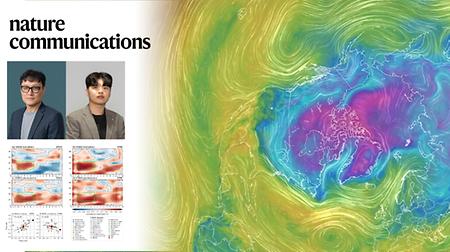
Sea Surface Temperature Shifts in the Pacific Improve Year-Ahead Winter Climate PredictionsThe findings of this research have been published in Nature Communications on March 25, 2026.Abstract The winter North Atlantic Oscillation (NAO) is a dominant mode of climate variability affecting temperature and precipitation across the Northern Hemisphere, yet its prediction at seasonal-to-decadal (S2D) lead times remains challenging. Here, using multi-year hindcasts from a multi-model ensemble initialized on 1 November for 1962–2019, we show that NAO skill one year ahead improves significantly when the El Niño–Southern Oscillation (ENSO) undergoes a phase transition next year. This improvement is linked to the northward propagation of anomalous atmospheric angular momentum, which dynamically organizes the NAO and is captured in reanalysis and models. During ENSO transition years, prediction skill increases with ensemble size, and when more than 10 members are used, the forecasts display the signal-to-noise paradox. These findings highlight the potential for enhanced one-year NAO predictability when ENSO transitions are present and large ensemble sizes are used in S2D prediction systems, given the skillful prediction of ENSO phase transitions at one-year lead times by multi-model ensembles. A research team, affiliated with UNIST, in collaboration with the UK Met Office Hadley Centre, has identified that major changes in the equatorial Pacific’s sea surface temperatures—such as transitions between El Niño and La Niña—significantly boost the accuracy of winter weather forecasts in the Northern Hemisphere. Led by Professor Myong-In Lee in the Department of Civil, Urban, Earth, and Environmental Engineering, their findings mark a breakthrough in understanding how tropical Pacific variability influences mid-latitude climate prediction. The study reveals that during ENSO transition years, the correlation coefficient for NAO prediction improves markedly—up to 0.60—compared to near-zero correlations in stable ENSO years. This phenomenon occurs because the oceanic temperature changes trigger atmospheric angular momentum shifts that gradually propagate northward, affecting the NAO pattern approximately one year later. The process involves the interaction of delayed effects—initiated by sea surface temperature anomalies—and the rapid transfer of atmospheric signals via Rossby waves, large-scale planetary waves influenced by Earth's rotation. “During ENSO transition years, the tropical ocean changes significantly influence the atmospheric circulation, strengthening the signals used for long-term forecasting,” explained Professor Myong-In Lee. “This understanding can help improve climate prediction models and support strategic planning in sectors like agriculture and energy.” These insights provide a crucial step toward enhancing Korea’s climate prediction capabilities and developing more accurate regional models. By understanding the dynamical mechanisms linking tropical Pacific variability to Northern Hemisphere winter patterns, researchers can improve forecasts for long-term climate variability, aiding disaster preparedness and resource management. This research was supported by the Korea Meteorological Administration and the National Institute of Meteorological Sciences, through projects focused on operational climate prediction systems and climate crisis response strategies. The findings of this research have been published in Nature Communications on March 25, 2026. The study has been supported by the Korea Meteorological Administration (KMA) and the National Institute of Meteorological Sciences (NIMS), through projects focused on operational climate prediction systems and climate crisis response strategies. Journal Reference Satyabrat Behera, Jong Sung Moon, Kirlie Iulius Figuera Michal, et al., "Electrical Control of Single Photon Emitters in WSe2 on a Si Nanopyramid Array with a Negligible Stark Effect," Nano Lett., (2026).- 2026-04-10
- JooHyeon Heo
- 350
-
News
UNIST Holds Second 『UNI-Blossom Week,』 Promoting Integrity through Springtime EngagementUNIST campus came alive with the vibrancy of spring during the 『UNI-Blossom Week,』 held from March 31 to April 2, 2026.UNIST held its second 『UNI-Blossom Week』 from March 31 to April 2, presenting a series of spring programs designed to promote the value of integrity through interactive, campus-wide engagement. Organized by the Office of General Administration, the three-day event reimagined integrity—often perceived as a formal or abstract concept—through a festival-style program that encouraged students, faculty, staff, and visitors to participate with ease. Set against a campus in full cherry blossom bloom, activities unfolded across open green spaces and walkways, creating an inviting environment for shared experiences. A variety of hands-on programs took place throughout the campus. Participants engaged in an integrity-themed quiz, receiving light refreshments upon completion, while lawn areas hosted a treasure hunt centered on ethical awareness. Additional activities, including an integrity-themed roulette and prize draws, drew participation from across the UNIST community. UNISTATION, the official student broadcasting station of UNIST also hosted a live open radio segment, sharing student stories and capturing the atmosphere of the campus in real time. The broadcast contributed to a sense of connection, reflecting both the energy of the event and the seasonal character of the setting. By integrating themes of transparency and fairness into games, activities, and live programming, the event moved beyond conventional, message-driven approaches. Instead, it encouraged participants to engage with the concept of integrity as a practical and everyday value, embedded in campus life. A student participant remarked, “Taking part in these activities with friends while enjoying the cherry blossoms made the idea of integrity feel much more immediate and meaningful.” RyoungEun Kim, Dean of General Administration, said, “This event provided a meaningful opportunity for members of the university community to reflect on the value of integrity in a shared setting. We will continue to develop initiatives that allow these principles to take root naturally within campus culture.” Building on this initiative, the Office of General Administration plans to expand seasonal engagement programs that foster communication and contribute to a campus environment grounded in trust and mutual respect.- 2026-04-09
- JooHyeon Heo
- 291
-
Research
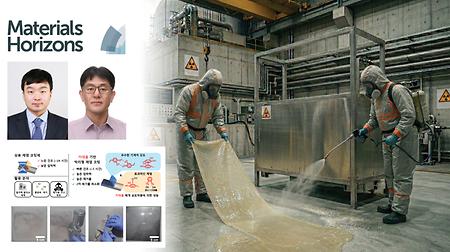
New Study Unveils Mussel-Inspired Coating for Rapid Radioactive Surface DecontaminationThe findings of this research have been published online in the March 2026 issue of Materials Horizons.Abstract Efficient and rapid decontamination of radioactive elements is important to prevent radioactive exposure. Herein, we develop a strippable catechol-terminated polyurethane (CPU) coating for effective surface decontamination. Our polyurethane coating can be directly applied to contaminated surfaces via simple spraying or solution casting, followed by rapid drying at room temperature. The resulting coating is easily stripped off with sufficient toughness and adhesion strength, showing superior 137Cs removal efficiency on stainless steel (∼94.9%) and rough cement (∼59.1%), in a much shorter time (<3 h) compared to commercial decontamination coatings (∼93.8% on stainless steel and ∼8.4% on cement after 24 h). This performance can be attributed to the strong adhesion and cohesion mediated by catechol moieties. Furthermore, after use, the coating waste is readily dissolvable in acetone, suggesting potential for reducing radioactive waste with the aid of an appropriate separation process, thereby preventing secondary contamination. These results establish CPU as a promising radioactive decontamination strategy. Professor Dong Woog Lee from the School of Energy and Chemical Engineering at UNIST, in collaboration with the Korea Atomic Energy Research Institute (KAERI) have unveiled a novel, mussel-inspired polyurethane coating capable of removing over 95% of radioactive cesium from surfaces in just three hours—far faster than existing methods. This breakthrough promises to enhance safety and efficiency in nuclear decontamination efforts. The innovative coating utilizes catechol groups—derived from mussel adhesion proteins—attached to polyurethane polymer chains, creating a highly adhesive surface. Applied onto contaminated surfaces, the coating dries within hours and can be peeled off like tape, effectively removing radioactive particles. Laboratory tests demonstrated a cesium removal efficiency of 94.9% on stainless steel and 13.1% on porous cement surfaces after two applications, outperforming commercial products that typically require 24 hours. Additionally, the coating can be dissolved in acetone post-use, enabling waste separation and reducing secondary contamination. Dr. Heeman Yang, lead researcher from KAERI, stated, “This technology offers a faster, more effective, and environmentally conscious approach to decontamination. Its ability to rapidly remove radioactive materials while facilitating waste management marks a significant advancement in nuclear safety.” This development addresses critical needs in nuclear facility decontamination, emergency response, and waste reduction. By combining speed, efficiency, and eco-friendliness, the coating holds promise for broad application in nuclear safety and environmental management, contributing to safer decommissioning and accident mitigation in the future. The findings of this research have been published online in the March 2026 issue of Materials Horizons. The study has been supported by the Institute of Civil Military Technology cooperation, funded by the Defense Acquisition Program Administration and the Ministry of Trade, Industry and Energy (MOTIE). Journal Reference Jae Seung Lee, Ye-won Jeong, Donghyun Kim, et al., "A strippable catechol-terminated polyurethane coating for large-area radioactive cesium decontamination," Mater. Horiz., (2026).- 2026-04-09
- JooHyeon Heo
- 410
-
Community
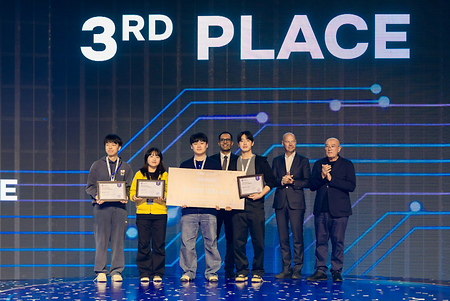
UNIST Undergraduate Team Places Third at International Medical AI HackathonTeam ULSANER demonstrates strong performance in both model evaluation and applied implementation.A team of undergraduate students from UNIST placed third at the 2026 AI in Healthcare Hackathon, an international competition focused on medical image analysis. Competing as Team ULSANER, the four-member group advanced to the final round held in Uzbekistan from March 27–28, 2026. Among 58 finalist teams from 17 countries, the team achieved the top score in the initial model evaluation stage before securing third place overall following final presentations and technical assessments. Organized by Central Asian University as part of the CAU Tech Hackathon 2026, the competition drew more than 1,200 participants across approximately 300 teams worldwide. Team ULSANER, consisting of Jeong Jae Lee and MinSeong Kim from the Department of Industrial Engineering, Minguk Jeon from the Department of Computer Science and Engineering, and HyeRi Cho from the Department of Biomedical Engineering. Their interdisciplinary collaboration enabled the integration of computational methods with domain-specific insights. The final challenge required participants to develop an AI system, capable of classifying 12 types of skin lesions from biopsy images and identifying lesion regions through segmentation. Evaluation criteria extended beyond model accuracy to include clarity of presentation and practical usability. To address this task, the team developed a deep learning–based framework integrating classification and segmentation. Using an automated optimization approach, they systematically evaluated model architectures and hyperparameters before applying an ensemble method to ensure consistent performance across new data. Model robustness was strengthened through cross-validation, focal loss to address class imbalance, and data augmentation techniques. This approach improved segmentation performance, increasing the Intersection over Union (IoU) metric from 0.8474 to 0.8528. To demonstrate real-world applicability, the team implemented a web-based interface, SkinScanner, enabling users to upload images and view both classification results and segmented outputs. The interface incorporated the clinically recognized ABCD rule—asymmetry, border, color, and diameter—to enhance interpretability and user understanding. “The project brought together our academic training and collaborative problem-solving across disciplines," said Jeong Jae Lee, who led the team. “Refining the system through each stage of the competition was particularly meaningful.” MinSeong Kim noted that anomaly detection in complex data has broad applications beyond healthcare, while Minguk Jeon emphasized the efficiency gained through automated optimization. HyeRi Cho added that the experience highlighted the importance of interpretability and trust in AI systems.- 2026-04-08
- JooHyeon Heo
- 329
-
Research
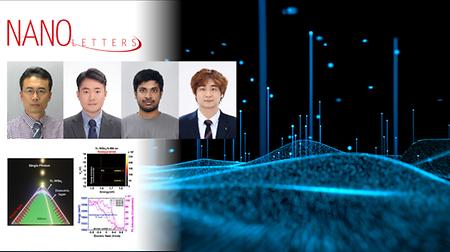
New Study Unveils High-Purity, Electrically Controlled Single-Photon Source for Quantum TechnologiesThe findings of this study have been published in the online version of Nano Letters on March 11, 2026.Abstract Single-photon emitters (SPEs) based on two-dimensional (2D) materials have attracted a lot of attention due to their unique benefits such as mechanical flexibility, high quantum yield, and easy integration on a chip. However, the electrical modulation of such emitters at a single-photon level still remains a challenge. Herein, we provide a new route to engineer electrically controllable purified SPEs in a monolayer (1L) WSe2 using a Si nanopyramid structure. The Si nanopyramid structures allow not only the generation of high strain to localize the SPEs but also the application of voltage for electrical modulation. Of particular interest, while our structure modulates the single-photon emission with an applied gate voltage, it does not exhibit unwanted spectral shift for the applied voltage, i.e., a negligible Stark effect, due to the existence of an air gap between the 1L-WSe2 and the nanopyramid. The single photon purity is improved by electrical modulation down to g(2)(0) = 0.06 ± 0.03. Researchers at UNIST have developed a novel single-photon emitter (SPE) that can be electrically switched on and off with high purity and stability. This breakthrough addresses key challenges in quantum device engineering, paving the way for scalable quantum computing and secure quantum communication. Based on a 2D semiconductor integrated with a silicon nanopyramid structure, the device generates single photons with minimal spectral shift during electrical modulation. By engineering a nanoscale air gap, the team effectively suppresses the Stark effect—preventing energy shifts in emitted photons—while maintaining a high level of single-photon purity (g(2)(0) ≈ 0.06). This design also reduces background emissions from defects, enhancing overall performance. “This work represents a significant step toward integrated quantum photonics,” said the research team. “Controlling single photons electrically without spectral degradation opens new possibilities for scalable quantum devices.” This study has been participated by Satyabrat Behera and Jong Sung Moon, as first authors of the study. Published in the March 2026 issue of Nano Letters, the research was supported by the IITP (Institute of Information & Communications Technology Planning & Evaluation)-ITRC (Information Technology Research Center) program by the Ministry of Science and ICT (MSIT), the National Research Foundation of Korea (NRF), and UNIST. Journal Reference Satyabrat Behera, Jong Sung Moon, Kirlie Iulius Figuera Michal, et al., "Electrical Control of Single Photon Emitters in WSe2 on a Si Nanopyramid Array with a Negligible Stark Effect," Nano Lett., (2026).- 2026-04-08
- JooHyeon Heo
- 435
-
News
UNIST Expands Digital Outreach with 『The UNIST Brief』 on LinkedInSubscribe to 『The UNIST Brief』—your monthly snapshot of UNIST.From cutting-edge research to campus moments, UNIST is bringing its stories together in a new way. UNIST has launched 『The UNIST Brief,』 a monthly newsletter on LinkedIn that curates the most compelling research, innovation, and campus highlights from across the university—designed for a global audience. The inaugural issue, released on April 3, coincides with the university’s homepage renewal and reflects a broader digital communications strategy to expand reach and deepen engagement across platforms. Each edition features a leading research story, alongside widely read highlights, media coverage, faculty insights, and campus experiences—distilled into a concise, visually engaging format. As a complement to UNIST’s existing communications, 『The UNIST Brief』 represents a shift toward more dynamic, platform-native storytelling—connecting audiences to the university’s most impactful work. Explore the latest issue and follow 『The UNIST Brief』 on LinkedIn to stay updated. Subscribe via LinkedIn- 2026-04-08
- JooHyeon Heo
- 353
-
News
UNIST Plants 550 Hydrangeas Along Gamak Pond Trail for Summer BloomIn celebration of the 81st National Arbor Day, UNIST carried out a hydrangea planting initiative along the trail surrounding Gamak Pond, creating a seasonal landscape expected to come into bloom in early summer. Organized by the UNIST Safety Facility Management Division, the event involved the planting of 550 hydrangea shrubs along one of the campus's most frequented walking paths. The effort aims to enhance the natural setting of the pondside area and establish a continuous floral corridor. The event brought together President Chong Rae Park, along with faculty, staff, and students, who participated in cultivating the space. Of the total, 450 shrubs were provided by UNIST and approximately 100 by its campus operations partner, S&I, which also supported the planting process. The hydrangeas include a range of varieties—such as Endless Summer Original, Limelight, Pinky Promise, and Strong Annabelle—offering diverse colors and forms. Blooming from June to July, the flowers are well suited to waterside environments and are expected to complement the landscape around Gamak Pond, while symbolizing gratitude and harmony. “Today’s planting reflects a shared commitment to shaping and caring for our campus environment,” said President Chong Rae Park. “We hope these efforts will grow into a lasting part of the UNIST community.” Jaecheon Lee, Director of the Safety Facility Management Division, added, “This initiative provided a meaningful opportunity for our community to contribute to the campus landscape. We hope the trail will become a distinctive feature of UNIST, particularly during the blooming season.” The event also included a hands-on planting activity with 53 children from the UNIST Day Care Center, extending participation across generations and reinforcing a shared sense of community. The Gamak Pond trail is expected to emerge as a new seasonal highlight, as the hydrangeas come into bloom in the months ahead.- 2026-04-06
- JooHyeon Heo
- 253
-
Research
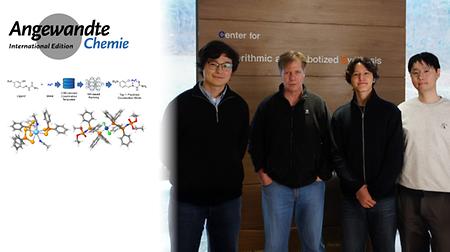
When Chemical Intuition Meets Neural Networks: Hybrid AI Algorithm Predicts Metal–Ligand Coordination StructuresTheir findings have been published in Angew. Chem. Int. Ed. on February 21, 2026.Hemoglobin, which gives blood its red color, the light-emitting materials in smartphone OLED displays, and catalysts used in manufacturing plastics and pharmaceuticals—all share a common feature that is they all involve metal–ligand coordination complexes. In these structures, a central metal ion is surrounded by organic molecules, known as ligands. Now, a novel artificial intelligence (AI) algorithm offers the promise of designing these complex materials more swiftly and accurately, significantly reducing trial-and-error efforts. Predicting how a metal ion will 'shake hands' with an organic molecule is an inherently complex task, often challenging even for seasoned scientists. This difficulty arises because organic ligands contain multiple potential binding sites, and the number and mode of coordination can vary widely depending on the specific metal and its oxidation state. As a result, dozens or even hundreds of potential structural configurations can exist. Led by Distinguished Professor Bartosz A. Grzybowski of the Department of Chemistry and Director of the Center for Algorithmic and Robotized Synthesis (CARS) within the Institute for Basic Science (IBS) at UNIST, the research team has addressed this challenge not through increased computational power, but by integrating 'chemical intuition' directly into AI. Published in Angewandte Chemie, their hybrid AI approach moves beyond simple pattern recognition by encoding fundamental chemical principles into neural networks. Figure 1. An AI-powered hybrid model predicts metal–ligand coordination modes by integrating chemical rules from crystal structures with machine learning, enabling accurate design of complex organometallic structures. "We have developed a 'hybrid' strategy that combines classical chemical knowledge with machine learning to accurately predict how metals and organic ligands bind," explains Professor Grzybowski. "By analyzing over 100,000 crystal structures from the Cambridge Structural Database, we trained a model that 'understands' the specific behavior of different metals and their oxidation states—something previous models could not achieve." This innovative technology is poised to become a key component in large-scale computational pipelines. Professor Grzybowski notes, “We expect it to be highly valuable in designing transition metal catalysts used across industries—from pharmaceuticals to advanced functional materials.” To make this cutting-edge tool accessible worldwide, the team has released RDMetallics, an open-source, Python-based software package, along with a dedicated web portal (coordinate.rdmetallics.net). Researchers anywhere in the world can now predict complex metal–ligand coordination modes directly through their web browsers—no coding skills or expensive hardware required. Supported by the Institute for Basic Science (IBS), this research was published online on Angewandte Chemie International Edition on February 21, 2026. Bartosz A. Grzybowski Distinguished Professor, Department of Chemistry, UNIST Director, IBS Center for Robotized and Algorithmic Synthesis (CARS) E: grzybor72@unist.ac.kr William I. Suh IBS Public Relations Team E: willisuh@ibs.re.kr Story Source Materials provided by the Institute of Basic Science. Journal Reference Galymzhan Moldagulov, Kisung Lee, Sanzhar Nurgaliyev, et al., "Hybrid Computational Strategy for Predicting Complex Ligand–Metal Architectures," Angew. Chem. Int. Ed. (2026). https://doi.org/10.1002/anie.202524655- 2026-04-03
- JooHyeon Heo
- 707
-
기고
[목요칼럼]특이점은 지났다, 이제는 ‘AI 경영’의 시간AI기술 넘어 조직 운영방식 전환 필요
인구 감소 속 AI경영으로 생산성 유지
울산 산업 데이터로 AI경영 모델 선도1882년, 에디슨이 뉴욕 맨해튼에 세계 최초의 상업용 발전소를 가동했을 때, 사람들은 전기의 시대가 즉시 도래할 것이라 기대했다. 그러나 전기가 실제로 미국 제조업의 생산성을 끌어올린 것은 40년이 지난 1920년대의 일이었다. 경제사학자 폴 데이비드(Paul David)가 규명했듯, 전기라는 범용기술의 잠재력이 실현되기까지는 공장의 레이아웃을 재설계하고 조직 운영 방식을 근본적으로 바꾸는 ‘경영의 전환’이 반드시 뒤따라야 했다. 기술이 아무리 혁명적이어도, 그것을 담아낼 경영 체계 없이는 생산성 통계에 아무런 흔적도 남지 않는다. 1987년 로버트 솔로우가 꼬집은 ‘생산성 역설’은 AI 시대인 오늘날에도 되풀이되고 있다. 인공지능의 기술적 특이점은 이미 우리 곁을 지나갔다. 대규모 언어 모델은 인간 수준의 추론 능력을 갖췄고, 생성형 AI는 코딩에서 법률 검토까지 전문 영역으로 빠르게 침투하고 있다. 물론 AI 기술 개발은 여전히 진행 중이며, 앞으로도 지속적인 투자와 연구가 필요한 영역이다. 그러나 기술 개발에 쏟는 관심에 비해, 이를 경영 현장에서 가치로 전환하는 ‘AI 경영’은 상대적으로 조명을 덜 받아 왔다. AI 엔진을 만드는 경쟁만큼이나, 그 엔진을 장착할 ‘차체(비즈니스 모델)’와 ‘운전자(AI 경영 인재)’를 확보하는 일이 시급하다. 왜 AI ‘기술’이 아니라 AI ‘경영’인가. 에릭 브린욜프슨(Erik Brynjolfsson) 등의 연구가 보여주듯, AI가 총요소생산성(TFP) 향상으로 이어진 기업의 공통점은 단순한 기술 도입이 아니라 조직 재설계와 보완적 인적자본 투자를 병행한 곳이다. 팔란티어(Palantir)의 온톨로지(Ontology) 체계가 주목받는 것도 같은 맥락이다. 핵심은 특정 방법론이 아니라, 데이터를 경영적 가치로 전환하는 체계적 역량 그 자체가 기업 경쟁력의 원천이 됐다는 사실이다. AI 경영이 국가적 생존 전략이 되는 이유는 인구 구조의 변화에 있다. 거시경제학적 관점에서 노동 투입이 구조적으로 줄어들면, 자본 축적만으로는 수확체감의 벽을 넘기 어렵고 성장의 핵심 동력은 기술과 경영 혁신으로 수렴할 수밖에 없다. 한국의 합계출산율은 2025년 기준 0.80명으로 2년 연속 반등했으나 여전히 OECD 최하위권이다. 산업수도 울산은 지난 10년간 제조업 임금근로자가 3만1000명 감소했고, 40세 미만 청·장년층만 2만9000명이 줄었다. 이 추세가 이어지면 2032년까지 울산 제조업 인력이 7만명 부족해질 것이라는 전망도 나온다. 다론 아제모글루(Daron Acemoglu)와 파스쿠알 레스트레포(Pascual Restrepo)의 ‘과업 기반 프레임워크’가 시사하듯, AI는 단순히 일자리를 대체하는 기술이 아니라 기존 과업을 재편하고 새로운 고부가가치 과업을 창출하는 기술이다. AI 경영은 이 과업 재편을 전략적으로 설계해, 적은 인력으로도 생산성을 유지하면서 노동 시장을 고부가가치 중심으로 재편하는 역할을 한다. AI 경영 역량은 실험실이 아니라 산업 현장과 맞닿은 교육과 실천의 접점에서 길러진다. UNIST U미래전략원은 한국동서발전의 AI 전환 추진전략과 거버넌스 체계를 설계하고, 한국수력원자력과 ‘에너지×AI 융합연구혁신센터’ 설립을 추진하는 등 에너지 산업에 AI 경영을 접목해 왔다. 울산시와 전통산업의 미래기술 융합 사업을 기획하고, 한국연구재단과 R&D 매니지먼트 지원체계를 설계하는 등 제도적 기반도 다지고 있다. 경영과학부의 AI 경영 교육, U미래전략원의 산학 프로젝트, 노바투스아카데미의 사회 보급 교육이 삼각 체계를 이루며 현장형 인재를 배출하고 있다. 경제학에서 말하는 ‘비교우위’는 모든 것을 다 잘하는 데 있지 않다. AI 기술 개발은 당연히 지속돼야 하지만, 그와 함께 AI를 산업 현장에 접목하는 ‘경영의 표준’에서 앞서는 것이 한국에 가장 현실적인 전략이다. 울산의 산업 데이터와 UNIST의 전문성이 결합할 때, 대한민국은 AI 기술 수입국을 넘어 ‘AI 경영 모델 수출국’으로 도약할 잠재력을 갖춘다. AI 경영은 먼 미래의 이야기가 아니다. 울산의 공장에서, UNIST의 강의실에서, U미래전략원의 프로젝트 현장에서 이미 시작된 이 흐름을 대한민국 전체로 확산시키는 것이 우리의 과제다. 이사야 UNIST 경영과학부 교수·서울대 중소벤처기업정책센터 연구위원 <본 칼럼은 2026년 4월 2일 경상일보 “[목요칼럼]특이점은 지났다, 이제는 ‘AI 경영’의 시간”이라는 제목으로 실린 것입니다.>- 2026-04-02
- 이 사야
- 714



![[목요칼럼]특이점은 지났다, 이제는 ‘AI 경영’의 시간](/app/board/attach/image/thumb_558088_1775086251000.do)