UNIST site map
- Admissions
-
Academics
- Colleges and Schools
-
Academic Affairs
- Academic Calendar
- Academic Curriculum
- Requirements for Graduation
- Browse Open Courses
- Undergraduate Administration
-
Graduate Academic Affairs
- Tuition Fee Payment
- Academic Leave of Absence/ Academic Return
- Voluntary Withdrawal/ Expulsion
- Change of Major
- Change of Degree Program/ Dropping of Degree Program
- Class Period/ Attendance Period/ Academic Year・Semester
- Course Registration
- Course Drop
- Attendance/ Grade/ Exam
- Credit Transfer/ Credit Carryover
- Academic Forms
- Education Support
-
Research/Industry
- Research Aims
- Research Findings
- Researcher Search
-
Research Organizations
- UNIST Multi-Interdisciplinary Institute
- IBS Research Groups
-
UNIST Labs
- Department of Mechanical Engineering
- School of Energy and Chemical Engineering
- Department of Civil
- Department of Materials Science and Engineering
- Department of Nuclear Engineering
- Department of Industrial Engineering
- Department of Design
- Department of Biomedical Engineering
- Department of Biological Sciences
- Department of Electrical Engineering
- Department of Computer Science and Engineering
- Department of Mathematical Sciences
- Department of Chemistry
- Department of Physics
- School of Business Administration
- Graduate School of Carbon Neutrality
- Graduate School of Artificial Intelligence
- Research Support
- University-Industry Relations
- Campus Life
- News Center
- About UNIST
-
etc
- UNIST Bulletin
- Work-Life Balance Support System
- UNIST Gender Equality Plan
- Faculty Invitation for Tenure Track
- Faculty Invitation for Non-Tenure Track
- Board Meeting Minutes
- University Council Meeting Minutes
- Administrative Service Charter
- Privacy Policy
- Copyright Policy
- Rejection of Unauthorized Email Collection
- Operation and Management Policy for Video Information Processing Devices
- Information Disclosure
SEARCH


Connection Points of Knowledge, Everything About UNIST
Try searching.
Recommended search terms


STUDENT


- portal
- U Academics Innovation Center
- Leadership Center
- Dormitory
- Academic Information Center
- International Students Support
- Browse Open Courses
- Course Registration
- Graduation Requirements for Graduation
- Academic Leave of Absence/ Academic Return
- Military Service
- Certificate Issuance
- Academic Calendar
- Scholarships
- Campus Map
- Campus Life Guidebook
- Health Care Center
- Human Rights Center
- portal
- Job Opening
- Announcement for Bid
- UNIST AI Services
- UNIST Daycare Center
- Sports Center
- UI Downloads
- Announcement
- Recruitment of Professors (Non-tenure)
- Faculty Invitation for Tenure Track
- UNIST Academic Information Center
- Office of Research Facilities and Training
- Office of Research Affairs
- Rule Management System
- Academic Calendar


This is a collection of menus necessary for UNIST students .
students
- portal
- U Academics Innovation Center
- Leadership Center
- Dormitory
- Academic Information Center
- International Students Support
- Browse Open Courses
- Course Registration
- Graduation Requirements for Graduation
- Academic Leave of Absence/ Academic Return
- Military Service
- Certificate Issuance
- Academic Calendar
- Scholarships
- Campus Map
- Campus Life Guidebook
- Health Care Center
- Human Rights Center


This is a collection of menus necessary for prospective UNIST Students .
prospective Students


This is a collection of menus necessary for UNIST Faculty & Staff .
Faculty & Staff
- portal
- Job Opening
- Announcement for Bid
- UNIST AI Services
- UNIST Daycare Center
- Sports Center
- UI Downloads
- Announcement
- Recruitment of Professors (Non-tenure)
- Faculty Invitation for Tenure Track
- UNIST Academic Information Center
- Office of Research Facilities and Training
- Office of Research Affairs
- Rule Management System
- Academic Calendar


NEWS CENTER
Discover not only Research Findings and event news, but also the diverse facets of UNIST presented by reporters and writers.
News Center

UNIST News
총 3354건의 게시물이 있습니다.
There are a total of 3354 posts.
-
News
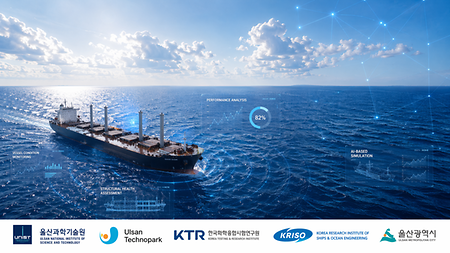
UNIST to Establish KRW 38.2 Billion AI Ship Technology Testing and Validation CenterNew facility to support autonomous navigation and eco-friendly ship systemsUNIST has secured a government-funded project to establish a testing and validation center for AI-based ship equipment and advanced components, marking a major step toward advancing Korea’s shipbuilding industry. The project, supported by the Ministry of Trade, Industry and Energy (MOTIE), was selected under a 2026 government initiative to strengthen infrastructure in the shipbuilding and offshore sector. With a total budget of KRW 38.2 billion, it will support the development and validation of AI-driven autonomous ship systems and advanced composite materials in response to tightening environmental regulations led by the International Maritime Organization (IMO), as well as evolving industry demands. Scheduled for completion by 2030, the center will be located in the Ulsan Mipo National Industrial Complex. UNIST will oversee its construction and operation in collaboration with the Ulsan Metropolitan Government, with participation from Ulsan Technopark, the Korea Testing & Research Institute (KTR), and the Korea Research Institute of Ships and Ocean Engineering (KRISO). Designed as an end-to-end validation platform, the facility will support the full development cycle—from design and prototyping to performance testing and certification readiness. In the advanced components domain, it will enable the validation of fiber-reinforced plastic (FRP)-based ship structures, exterior materials, and propulsion components under real-world operating conditions, including mechanical stress, corrosion, and cryogenic environments. The center will also incorporate AI- and digital twin-based manufacturing systems to enhance process optimization, quality control, and productivity. For AI-based ship systems, the center will establish a hybrid validation environment combining simulation and field testing, supporting the evaluation of autonomous navigation algorithms, sensor modules, and control systems in terms of safety, reliability, and repeatability, and accelerating commercialization. The center is expected to play a key role in supporting small and mid-sized shipbuilding suppliers by improving access to testing infrastructure and validation data, thereby strengthening industrial competitiveness and facilitating entry into global markets. Professor Young-Bin Park of the Department of Mechanical Engineering at UNIST, who leads the project, said, “This initiative will help bridge the gap between technology development and commercialization, supporting the advancement of environmentally sustainable and intelligent shipbuilding."- 2026-04-24
- JooHyeon Heo
- 92
-
기고
[다산칼럼] 꿈의 크기가 지역 운명 가른다커지는 수도권·지방 간 격차 기득권 토착 구조도 한 원인
AI가 몰고 오는 새로운 변화 연구기능, 제조공장에 통합
부울경은 거대한 '산업 펜타곤' 세계 중심 되는 꿈 가져야“도망쳐라. 찾아라. 당신에게 발이 달린 이유다.” 일본 동화작가 요시타케 신스케의 말이다. 변화가 오면 새롭게 생성하고 진화해온 생존의 비유적 표현 같다. “도망쳐라”는 “변화를 수용하라”는 주문으로 들린다. 인공지능(AI)이 몰고 오는 변화도 예외가 아니다. 열린 자세로 외부를 소환(召喚)하고 담을 허물어 월경(越境)하는 기제(mechanism)가 일상의 철학이 돼야 할 판이다. 그냥 앉아서 죽지 않으려면 말이다. 역사적으로 변방에서 중심으로 우뚝 선 지역이 있다. 작은 언덕에서 제국이 된 로마, 항구에서 민주주의 발상지가 된 아테네의 고대 서사부터 그렇다. 근대 산업혁명기 맨체스터는 농촌에서 세계 공장이 됐다. 현대에 와서도 그렇다. 영국 식민항에서 아시아 허브가 된 싱가포르, 사막 어촌에서 중동 허브가 된 두바이, 작은 어촌에서 하드웨어 실리콘밸리가 된 선전(深川) 등이 있다. 변방의 파괴적 혁신론의 사례들이다. 국가적으로는 2차 세계대전 후 식민지에서 독립한 나라 가운데 한국 같은 드라마가 없다. 제3세계 국가의 경제적 예속을 다룬 종속이론이 학계를 강타한 적이 있지만 한국은 그 결정적 반증으로 꼽힐 정도다. 국가와 리더의 전략적 선택과 내부 동력이 빚어낸 합작품이었다. 이런 한국에서 정작 수도권과 비수도권의 격차 담론은 지역판 종속이론을 떠올리게 한다. 언제까지 중앙정부와 수도권 탓으로 돌린다고 해결될 일이 아니다. 지역과 리더는 과연 어떤 전략적 선택을 하고 내부 동력을 이끌어내고 있는가. 돌아보면 지역 내부 탓이 더 클지 모른다. 지역 청년이 수도권으로 떠나든 말든. 지역 리더의 꿈 크기가 딱 거기까지였다. 내 이익만 챙기면 그만이라는 기득권 토착 구조야말로 지역 성장을 가로막는 근원이라는 한탄이 나온다. 그동안 지역에는 공장만 남고 연구소는 모조리 수도권으로 나간다는 구도였다. 젊은 인재는 수도권으로 유출되고 지역은 고사할 수밖에 없다는 자조가 넘쳐났다. 고착화될 것만 같은 이 프레임에 균열이 생기기 시작했다. 그 누구도 아닌 AI가 몰고 온 변화다. 특히 주목할 것은 AI 기반 풀스택(full-stack) 신(新)공장 시대의 도래다. 지역 공장이 제조AI로 전환하지 않으면 안 되는 결정적 이유가 있다. 이대로 가면 중국의 속도에 추월당하고, 미국과의 분업 기회도 놓칠 판이다. 연구소는 수도권으로 가고 공장만 지역에 남으면 제조AI는 불가능하다. ‘모델 따로, 데이터 따로, 실증 따로’ AI 전환이 성공할 리 만무하다. 공장과 연구소는 함께 가야 한다. 공장이 수도권으로 올 수 없다면 연구소가 지역으로 올 수밖에 없다. 스타트업 창업이 AI 수요가 있는 공장 주변에서 일어나야 한다. 전기 에너지원 및 생산·소비 패러다임 변화도 이 흐름을 지지한다. 조짐은 이미 나타나기 시작했다. 지역이 이 기회를 잡으면 대전환점을 확보할 수 있다. 성장의 변혁적 반란을 일으킬, 그것도 수도권 2부 리그가 아니라 글로벌 1부 리그로 바로 진입할 수 있는 곳이 있다. 부울경으로 불리는 부산·울산·경남이다. 근거는 차고 넘친다. 당장 조선(제조)과 해운(금융)을 연계한 해양수도 잠재력이 그렇다. 북극 항로 시대 기회의 땅이다. 우주·항공·국방·기계·재료·조선·자동차·비철금속·배터리·석유화학 등은 경제와 안보의 교집합이다. 이 지역은 경제·안보산업의 최대 허브다. 인접 경주와는 원전 벨트로 이어진다. 철강도시 포항과는 수소 생산과 활용, 저탄소 강재와 그 수요까지 수소클러스터 창출이 가능하다. 이런 지역이 세계 어디에 또 있나. 부울경+경주·포항은 거대한 산업 펜타곤이다. AI 기반 제조와 지속가능한 에너지 전시회로 유명한 하노버 메세를 능가할 부울경 메세를 꿈꾸지 말란 법도 없다. UNIST(울산과학기술원), 포스텍 등 연구중심대학은 수도권으로의 인재 유출 우려를 글로벌 인재 유입으로 날려버릴 핵심 무기다. 통째로 규제혁파지구로 가면 혁신의 속도전이 가능하다. 외부 변화를 받아들이고 월경을 감행할 용기만 있다면. 그래서 제안한다. 지역이 주체성을 갖고 진짜 자치를 열 정치 지형을 창출하면 어떤가. 변방 지역이 수도권을 제치고 동북아시아, 아시아, 아니 세계 중심이 되는 꿈을 갖고 판을 엎어보자. 6·3 지방선거에 거는 기대다. 안현실 UNIST 연구부총장 <본 칼럼은 2026년 4월 24일 한국경제 “[다산칼럼] 꿈의 크기가 지역 운명 가른다”라는 제목으로 실린 것입니다.>- 2026-04-24
- 안현실
- 105
-
Research
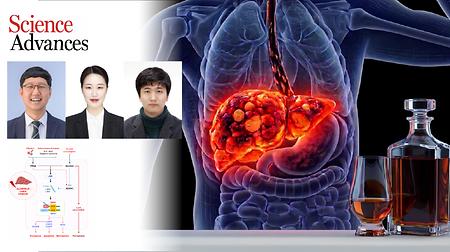
Breakthrough Unveils How Alcohol Amplifies Liver Damage During IllnessThe findings of this research were published in Science Advances on April 10, 2026.Abstract Alcohol consumption has short- and long-term impacts on physical and mental health. Although multiple host and environmental factors contribute to alcohol-related disease, the innate immune sensors that detect toxic signals from alcohol remain poorly defined. Here, we show that alcohol cooperates with sterile- or infection-induced interferon signaling to drive inflammatory cell death, cytokine release, and liver injury in humans and mice. We identified the pattern recognition receptor Z-DNA binding protein 1 (ZBP1) as a key innate immune sensor mediating pyroptosis, apoptosis, and necroptosis in response to combined ethanol and interferon stimulation. While interferon elevated ZBP1, ethanol suppressed adenosine deaminase acting on RNA 1 (ADAR1) expression. Together, interferon and ethanol activated JNK signaling to promote Z-RNA formation, triggering ZBP1. These findings reveal a mechanism by which alcohol and interferon converge to induce ZBP1-dependent inflammatory cell death and liver pathology, providing mechanistic insight and highlighting potential therapeutic targets for alcohol-related disease. A research team, affiliated with UNIST has uncovered a novel molecular pathway explaining why alcohol consumption can lead to severe liver damage, particularly when individuals are already battling infections, such as cold and influenza. Led by Professor SangJoon Lee from the Department of Biological Sciences at UNIST, alongside Professors Rajendra Karki of Seoul National University and Si Ming Man of The Australian National University, the research sheds light on how alcohol interacts with the immune system to accelerate liver cell death and exacerbate liver disease. The team discovered that, in the presence of interferon—a key immune signaling molecule produced during infections—alcohol triggers an inflammatory cascade within liver cells. Specifically, alcohol increases the level of Z-RAN, an abnormal form of RNA, which is detected by the pattern recognition receptor Z-DNA binding protein 1 (ZBP1). This activation initiates inflammatory cell death, contributing to liver damage. Under normal circumstances, the protein ADAR1 suppresses Z-RNA formation, preventing unwarranted immune activation. However, the study revealed that alcohol impairs ADAR1 production, allowing Z-RNA to accumulate and activate ZBP1. This process involves the JNK signaling pathway, which was validated through animal experiments showing that inhibiting ZBP1 or blocking JNK signaling significantly reduced liver injury—even in the presence of alcohol and interferon. Professor Lee explained, "While the direct toxicity of alcohol on liver cells has long been recognized, our findings highlight an immune-mediated pathway that exacerbates liver damage during illness. This discovery opens new possibilities for targeted therapies, such as ZBP1 inhibitors, to treat alcohol-related liver diseases." The findings of this research were published in Science Advances on April 10, 2026. The study was supported by the National Research Foundation of Korea (NRF), the Korea Drug Development Find (KDDF), the Institute for Basic Science (IBS), the Circle Foundation, and Yuhan Corporation. It has also been supported through the Global Physician-Scientist Training Program and the ARPHA-H Project from the Korea Health Industry Development Institute (KHIDI) under the Ministry of Health and Welfare (MOHW). Journal Reference Yeonseo Jang, Hoeun Bae, SuHyeon Oh, et al ., “Innate immune sensing of dietary alcohol ignites inflammation to drive alcohol-related disease,” Adv. Sci ., (2026).- 2026-04-24
- JooHyeon Heo
- 113
-
Community
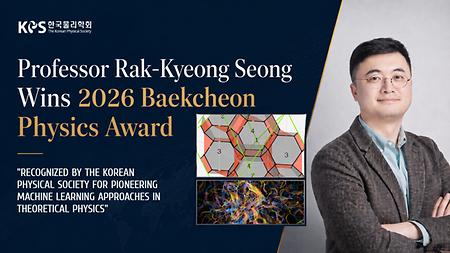
Professor Rak-Kyeong Seong Wins 2026 Baekcheon Physics AwardRecognized for expanding the frontiers of theoretical physics through machine learning and for advancing international research collaboration.Professor Rak-Kyeong Seong of the Department of Mathematical Sciences at UNIST has been awarded the 2026 Baekcheon Physics Award by the Korean Physical Society in recognition of his outstanding contributions to theoretical physics research in Korea. Professor Seong was honored for expanding the scope of theoretical physics by pioneering the use of machine learning techniques to the study of non-perturbative phenomena in quantum field theory and string theory. Presented annually by the Korean Physical Society, the Baekcheon Physics Award recognizes outstanding early-career physicists in theoretical particle physics. Because recipients are selected through a rigorous review process based on research excellence, the award is widely regarded as one of the most prestigious distinctions in Korea's theoretical physics community. Among Professor Seong's representative achievements is his 2017 paper, “Machine Learning of Calabi-Yau Volumes,” published in Physical Review D. The study, which used machine learning to predict the complex geometric properties of Calabi-Yau manifolds, is widely regarded as one of the pioneering works that introduced machine learning methods into research in quantum field theory, string theory, and mathematical physics. Professor Seong has also received international recognition as an invited speaker at the International String Data Conference for three consecutive years, hosted by the University of Cambridge in 2022, the California Institute of Technology in 2023, and Kyoto University in 2024. He has also continued to publish in leading journals, including Physical Review D and the Journal of High Energy Physics . Currently an associate professor in the Department of Mathematical Sciences at UNIST, with a joint appointment in the Department of Physics, Professor Seong has collaborated extensively with leading scholars in the field. His co-authored papers on Calabi-Yau manifolds with Professor Yang-Hui He and Fields Medalist Professor Shing-Tung Yau, published in 2018 and 2025, reflect the breadth of his international research collaborations. In January 2024, he also organized an international conference at UNIST, inviting Professor Yau as a distinguished speaker. “Machine learning and AI will transform how fundamental science is conducted, particularly in the study of quantum field theory, string theory, and mathematical physics,” said Professor Seong. “At UNIST, I will continue to apply these to pursue even greater research techniques at the intersection of mathematics, physics, and AI.”- 2026-04-24
- JooHyeon Heo
- 105
-
News
UNIST Explores the Evolution of K-Indie Music in Special Lecture SeriesA five-session lecture series examines independent music in its social and cultural context.The UNIST Leadership Center will host a special lecture series, titled ' K-INDIE: Past and Present' from April 28 to June 2, 2026. Spanning five sessions, the series traces the evolution of indie music from the roots of blues and rock in the United States and the United Kingdom to the development of Korea's indie scene. It explores how independent music—defined by artistic autonomy outside mainstream commercial systems—has evolved alongside broader cultural shifts. Organized as part of the course ' Understanding Popular Music ,' the program will take place in Room 206 of the Business Administration Building and is open to all members of the UNIST community, including students, faculty, and staff. The series will be led by music critic Byungwook Jung, Head of the Global Contemporary Division of the Korean Music Awards Committee and Playlist Director at NAVER VIBE. The opening lecture, titled ' The Birth of Blues and Rock in the West, and the Concept of Indie Music' will introduce the historical and conceptual foundations of independent music. Subsequent sessions will examine the emergence of Korean band music and key trends in popular music history, followed by the rise of first-generation indie artists and alternative movements in the 2000s. The series will conclude with discussions on the resurgence of Korean indie and its evolution into the present day. A representative from the UNIST Leadership Center said the program is intended to broaden students' perspectives on contemporary culture and global trends through the study of popular music.- 2026-04-23
- JooHyeon Heo
- 112
-
Research
UNIST Unveils Smart Contact Lens with Meniscus Pixel Printing for Vision-Based Robotic ControlThe findings of this research have been published in Advanced Functional Materials on March 11, 2026.Abstract Contact lenses are emerging as strong candidates for next-generation extended reality (XR) interfaces due to their lightweight and ergonomic form factor. However, integrating photodetector arrays onto the limited area of a lens remains challenging with conventional micropatterning approaches, which rely on masks, multistep processes, and specialized equipment that inherently limit throughput and scalability. To address these constraints, we introduce a Meniscus Pixel Printing (MPP) strategy that enables rapid, mask-free patterning of MAPbI3 perovskite photodetectors without costly or complex fabrication tools. MPP uses a self-confined meniscus at a pipette tip to deterministically transfer perovskite ink, enabling 200 µm pixels to be printed within 1 s per pixel. In addition to planar substrates, MPP demonstrates stable pixel patterning on curved surfaces, highlighting its geometric adaptability and process versatility. Using this approach, we fabricate a 10 × 10 perovskite photodetector array and demonstrate stable photoresponse, retaining 92% of its initial performance after two months of storage. To overcome limited pixel density, a deep-learning-based super-resolution (SR) model reconstructs 10 × 10 inputs into 80 × 80 optical information with 97.2% accuracy and 0.03 s latency. Additionally, an AI-based eye-tracking system recognizes nine eye gestures with 99.3% accuracy, enabling smooth hands-free robotic arm control. A research team, led by Professor Im Doo Jung from the Department of Mechanical Engineering at UNIST, has developed a groundbreaking smart contact lens that enables users to control robots through eye movements. This innovative device combines embedded optical sensors with AI-based signal processing, offering a lightweight, intuitive human-machine interface with vast potential across industries. The lens incorporates a 10×10 array of light sensors capable of detecting subtle changes in light distribution caused by eye movements, including gaze direction and blinks. These signals are transmitted to control external robotic systems, as demonstrated with a robotic arm. Notably, the team employed a novel Meniscus Pixel Printing (MPP) technique to directly print sensors onto the curved lens surface without masks or complex fabrication steps, ensuring high precision and customizability. In addition to robotic control, the system demonstrates vision sensing capabilities by reconstructing optical information. To address the limited signal resolution inherent to micro-scale devices, the researchers applied deep-learning-based super-resolution algorithms, reconstructing high-fidelity signals equivalent to an 80x80 sensor array in just 0.03 seconds. This enables real-time, accurate control based solely on eye movements, achieving recognition accuracies of up to 99.3% under experimental conditions. This technology marks a significant advancement in ultra-compact human-machine interfaces, enabling precise, hands-free control of electronic devices. Potential applications include remote robotic operation, medical assistive devices, exploration in hazardous environments, defense systems, and smart mobility. Published in the March 2026 issue of Advanced Functional Materials (Impact Factor: 19.0, JCR Top 5%)—a top-tier journal in materials science—the research was selected as the Front Cover of the latest issue. The study received support from the National Research Foundation of Korea (NRF), the Ministry of Science and ICT (MSIT), the Institute of Information & Communications Technology Planning & Evaluation (IITP), and the Ministry of Trade, Industry, and Energy (MOTIE). Journal Reference Byung-Hoon Gong, Dohyean Kim, Jiyun Jeong, et al ., “Meniscus Pixel Printing for Contact-Lens Vision Sensing and Robotic Control,” Adv. Funct. Mater. , (2026).- 2026-04-23
- JooHyeon Heo
- 121
-
기고
[기고] 생명체에게 파업은 곧 죽음이다세포로 만드는 바이오의약품, 티끌만한 실수로도 변질 우려
파업으로 생산공정 멈추는 순간 글로벌 고객사들 등돌릴 것생명체는 수만 개의 반도체가 정밀하게 결합된 슈퍼컴퓨터로도 아직 작동원리를 100% 규명하지 못한 최첨단의 물질이다. 자그마한 변수만으로도 어떻게 변화할 지를 전혀 알 수 없다. 대표적인 사례가 알츠하이머성 치매의 주요 원인물질로 지목받고 있는 ‘아밀로이드 베타’다. 뇌 속에서 단백질의 미세한 접힘(folding) 오류가 뇌세포의 손상·사멸을 유도하는 독성물질을 만들어내게 된다. 이 사소한 변화를 아직도 우리는 풀지 못해 근원적 치매 치료제를 개발하지 못하고 있다. 그렇기에 살아있는 세포를 기반으로 만들어지는 바이오의약품 생산 공정은 세포 해동부터 배양-정제-충전이라는 일련의 연속공정이 한치의 오차도 없이 치밀하게 진행돼야만 하는 일종의 생명활동이다. 일반적인 공산품 제조 공정과는 결이 다른만큼 공정을 임의로 중단했다가 다시 시작하기 어려워 세포를 모두 죽여야 할 수도 있고, 자칫 최종 제품이 생명을 살리는 약이 아닌 ‘독약’이 되어버릴 수도 있다. 바이오의약품이 세계 유수의 주요 규제기관에서 직접 공정을 확인하고, 최종 산물을 검증하는 절차를 수없이 밟는 이유다. 사람의 몸에 직접 투약되는만큼 작은 결함만으로도 같은 공정을 밟았던 의약품 전체가 모두 폐기의 위기에 처한다. 미국 식품의약국(FDA) 등 주요 규제기관은 생산 과정에서 현행 우수의약품 제조·관리기준(cGMP)을 준수하지 않았다면 실제 제품에서는 아무런 이상이 발견되지 않더라도 해당 제품을 ‘변질’된 것으로 규정한다. 즉, 공정의 연속성이 단 한순간만 단절되더라도 해당 제품의 가치는 모두 사멸돼버릴 수 있는 것이다. 이는 제품의 ‘변질’이 바이오 산업에서 보다 포괄적으로 해석되는 이유다. 제조에 쓰이는 세포주, 항체 등은 매우 민감한 생명체이기 때문에 항상성이 조금만 훼손되더라도 사멸 또는 변이가 발생해 가치가 즉각적으로 상실될 수도 있다. 이러한 이유로 특히 바이오의약품 제조업체에서는 공정의 연속성을 한순간이라도 단절하는 사태는 필히 방지해야 한다. 현재 한 바이오의약품 제조업체에서 벌어지고 있는 노사갈등이 바이오 산업의 본질적 가치와 전혀 맞지 않는 이유다. 노조법 조항에도 나와있는 것처럼 ‘원료·제품의 변질 또는 부패를 방지하기 위한 작업은 유지돼야 한다’는 기본 철칙을 바탕으로 최소한의 의약품 생산 유지는 지켜내야 한다. 회사는 ’원료·제품의 변질 또는 부패를 방지하기 위한 작업’은 유지돼야 한다는 노조법 조항을 근거로 최소한의 의약품 생산 유지는 할 수 있게 해달라고 법에 호소하고 나섰다. 원료나 제품에 대한 보전작업이 이뤄지지 못한다면 생산되고 있던 바이오의약품은 모두 폐기될 수밖에 없다. 자신이 맡긴 약을 모두 폐기해버린 업체에 다시 의약품 생산을 맡기고 싶은 제약사가 어디 있을까? 자신 또는 가족이 당장 맞아야 하는 약을 노사 갈등 문제로 인해 생산하지 않은 바이오의약품 제조업체에게 어떤 제약사나 소비자가 다시 신뢰를 가질 수 있을까? 그렇기에 바이오 산업의 노사 갈등은 기존 다른 산업 분야와 같은 해법으로 풀 수 없다는 특수성을 명확하게 인식해야 한다. 세포가 배지를 먹고 쑥쑥 커나가듯이 바이오산업 기업 임직원 모두 성장의 과실을 공유하는 상생의 큰 틀 안에서 그 해결책을 찾아야 한다. 이러한 틀을 무시한 채, 기존의 노사 갈등 해법을 도모하는 것은 바이오 산업 생태계에 악영향을 끼치는 결과를 초래할 것이다. 바이오 산업에서 만약 파업이라는 극단적 방식이 채택된다면 어떠한 문제도 해결되지 않고 결국 공멸이라는 파국으로 치달을 수 밖에 없다. 바이오산업 기업에서 가장 중요한 가치인 상생을 유지하고자 한다면 노사 문제를 새로운 시각에서 바라보고 창의적인 해결책을 도모하는 책임있는 자세가 필요해 보인다. 김성필 UNIST 바이오메디컬공학과 교수 <본 칼럼은 2026년 4월 23일 매일경제 “[기고] 생명체에게 파업은 곧 죽음이다”라는 제목으로 실린 것입니다.>- 2026-04-23
- 김성필
- 134
-
Research
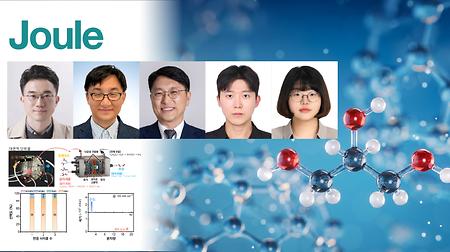
Innovative Scalable Electrochemical Approach for Transforming Waste Glycerol into Hydrogen and High-Value ChemicalsThe findings of this research were published online in Joule (IF: 35.4) on March 18, 2026.Abstract Interest in electrochemical glycerol oxidation reactions (GORs) continues to grow as a promising strategy for hydrogen production. By replacing the oxygen evolution reaction (OER), GOR reduces energy consumption while generating hydrogen at the cathode and value-added formate at the anode, offering techno-economic advantages over conventional water electrolysis. However, its practical implementation is still hindered by reliance on precious metal catalysts and performance losses in scaled-up systems. Here, we synthesized a non-precious CuCo oxide (CCO) electrocatalyst at a tens-of-grams scale through co-precipitation and simple surface treatment. When applied to an anion exchange membrane (AEM) electrolyzer, the modified CuCo oxide achieved 110 mA cm−2 at 1.31 Vcell using a 7 cm2 non-precious GOR anode with 96% formate selectivity. The system was further scaled to a 79 cm2 anode, delivering 3.2 A at 1.31 Vcell. This study demonstrates a practical and economically favorable pathway for scalable hydrogen production via glycerol valorization in AEM electrolyzers. A joint research team, led by Professors Ji-Wook Jang, Hankwon Lim, and Hosik Lee from the School of Energy and Chemical Engineering at UNIST, in collaboration with Dr. Juchan Yang from the Energy & Environment Materials Research Division at Korea Institute of Materials Science (KIMS), has announced the development of a high-performance, scalable electrochemical system that transforms waste glycerol—an industrial byproduct of biodiesel production—into hydrogen and value-added chemicals, such as formate. This innovative system replaces the conventional oxygen evolution reaction (OER) in water electrolysis with glycerol oxidation, resulting in reduced energy consumption and enhanced efficiency. Using a copper-cobalt oxide catalyst, the system a current density of 110 mA/cm² at just 1.31 V, with 96% selectivity for formate. The technology was successfully scaled to a 79 cm² electrode, demonstrating its potential for industrial applications. This advancement provides a sustainable, cost-effective pathway for large-scale hydrogen production through glycerol valorization. By simultaneously generating hydrogen and valuable chemicals from waste biomass, the approach promises significant reductions in green hydrogen costs and improved resource efficiency. Additionally, integrating energy and chemical manufacturing processes supports global efforts toward carbon neutrality and a sustainable hydrogen economy. Moreover, its scalability and compatibility with continuous operation suggest promising prospects for industrial deployment and further scale-up to megawatt-level systems. Juchan Yang, Principal Researcher at KIMS, emphasizes, “This study demonstrates the large-scale synthesis of low-cost, non-precious catalysts and their successful integration into a practical electrolyzer system, marking a significant step toward commercial viability.” Professor Ji-Wook Jang of UNIST adds, “Transforming biomass waste like glycerol into high-value chemicals and hydrogen not only accelerates carbon neutrality but also offers strategic advantages in building a sustainable hydrogen economy.” The findings of this research were published online in Joule (IF: 35.4) on March 18, 2026. The study was supported by the National Research Council of Science & Technology (NST), the Korea Institute of Energy Technology Evaluation and Planning (KETEP), the National Research Foundation of Korea (NRF), and the Korea Institute of Industrial Technology (KEIT). Core analyzes and computational modeling were conducted using supercomputing resources provided by the Korea Institute of Science and Technology Information (KISTI), with technical support, as well as the synchrotron radiation source at the 6D beamline of the Pohang Accelerator Laboratory. Journal Reference Ki-Yong Yoon, Seon Woo Hwang, Hee Yoon Roh et al. , “Commercial-scale glycerol valorization using surface-modified copper cobalt oxide catalyst in high-capacity anion exchange membrane electrolyzer,” Joule , (2026).- 2026-04-23
- JooHyeon Heo
- 169
-
News
UNIST and University of Ulsan Launch InnoCORE-Linked Research Internship ProgramThe signing ceremony of MOU between UNIST and the University of Ulsan took place on April 20, 2026.UNIST and the University of Ulsan (U of U) have signed a Memorandum of Understanding (MOU) to jointly operate the InnoCORE-linked Research Internship Program on April 20, 2026. The partnership aims to establish a collaborative research and education framework aligned with Korea's Regional Innovation System & Education (RISE) initiative, combining UNIST's research capabilities with the University of Ulsan's educational infrastructure to cultivate talent responsive to regional industry needs. Under the agreement, the institutions will co-develop and operate research internship programs and curricula in artificial intelligence (AI) and digital transformation (DX), while also promoting global exchange and international collaboration. The program provides undergraduate students with early exposure to research and strengthens pathways to advanced study. It also incorporates international engagement through partnerships with overseas research institutions and visits to major technology exhibitions, including IFA in Germany and CES in the United States. "This initiative brings together our respective strengths to advance both education and research," said President Chong Rae Park of UNIST. "By integrating research internships with academic programs, we aim to cultivate talent equipped with practical capabilities and responsive to industry needs." President Yeon-Cheon Oh of the University of Ulsan, added, "This collaboration will expand early research opportunities for students and contribute to developing talent aligned with regional industry demand."- 2026-04-22
- JooHyeon Heo
- 167
![[다산칼럼] 꿈의 크기가 지역 운명 가른다](/app/board/attach/image/thumb_571554_1776998270000.do)


![[기고] 생명체에게 파업은 곧 죽음이다](/app/board/attach/image/thumb_570302_1776920323000.do)