UNIST site map
- Admissions
-
Academics
- Colleges and Schools
-
Academic Affairs
- Academic Calendar
- Academic Curriculum
- Requirements for Graduation
- Browse Open Courses
- Undergraduate Administration
-
Graduate Academic Affairs
- Tuition Fee Payment
- Academic Leave of Absence/ Academic Return
- Voluntary Withdrawal/ Expulsion
- Change of Major
- Change of Degree Program/ Dropping of Degree Program
- Class Period/ Attendance Period/ Academic Year・Semester
- Course Registration
- Course Drop
- Attendance/ Grade/ Exam
- Credit Transfer/ Credit Carryover
- Academic Forms
- Education Support
-
Research/Industry
- Research Aims
- Research Findings
- Researcher Search
-
Research Organizations
- UNIST Multi-Interdisciplinary Institute
- IBS Research Groups
-
UNIST Labs
- Department of Mechanical Engineering
- School of Energy and Chemical Engineering
- Department of Civil
- Department of Materials Science and Engineering
- Department of Nuclear Engineering
- Department of Industrial Engineering
- Department of Design
- Department of Biomedical Engineering
- Department of Biological Sciences
- Department of Electrical Engineering
- Department of Computer Science and Engineering
- Department of Mathematical Sciences
- Department of Chemistry
- Department of Physics
- School of Business Administration
- Graduate School of Carbon Neutrality
- Graduate School of Artificial Intelligence
- Research Support
- University-Industry Relations
- Campus Life
- News Center
- About UNIST
-
etc
- UNIST Bulletin
- Work-Life Balance Support System
- UNIST Gender Equality Plan
- Faculty Invitation for Tenure Track
- Faculty Invitation for Non-Tenure Track
- Board Meeting Minutes
- University Council Meeting Minutes
- Administrative Service Charter
- Privacy Policy
- Copyright Policy
- Rejection of Unauthorized Email Collection
- Operation and Management Policy for Video Information Processing Devices
- Information Disclosure


Connection Points of Knowledge, Everything About UNIST
Try searching.
Recommended search terms


- portal
- U Academics Innovation Center
- Leadership Center
- Dormitory
- Academic Information Center
- International Students Support
- Browse Open Courses
- Course Registration
- Graduation Requirements for Graduation
- Academic Leave of Absence/ Academic Return
- Military Service
- Certificate Issuance
- Academic Calendar
- Scholarships
- Campus Map
- Campus Life Guidebook
- Health Care Center
- Human Rights Center
- portal
- Job Opening
- Announcement for Bid
- UNIST AI Services
- UNIST Daycare Center
- Sports Center
- UI Downloads
- Announcement
- Recruitment of Professors (Non-tenure)
- Faculty Invitation for Tenure Track
- UNIST Academic Information Center
- Office of Research Facilities and Training
- Office of Research Affairs
- Rule Management System
- Academic Calendar


This is a collection of menus necessary for UNIST students .
students
- portal
- U Academics Innovation Center
- Leadership Center
- Dormitory
- Academic Information Center
- International Students Support
- Browse Open Courses
- Course Registration
- Graduation Requirements for Graduation
- Academic Leave of Absence/ Academic Return
- Military Service
- Certificate Issuance
- Academic Calendar
- Scholarships
- Campus Map
- Campus Life Guidebook
- Health Care Center
- Human Rights Center


This is a collection of menus necessary for prospective UNIST Students .
prospective Students


This is a collection of menus necessary for UNIST Faculty & Staff .
Faculty & Staff
- portal
- Job Opening
- Announcement for Bid
- UNIST AI Services
- UNIST Daycare Center
- Sports Center
- UI Downloads
- Announcement
- Recruitment of Professors (Non-tenure)
- Faculty Invitation for Tenure Track
- UNIST Academic Information Center
- Office of Research Facilities and Training
- Office of Research Affairs
- Rule Management System
- Academic Calendar


NEWS CENTER
Discover not only Research Findings and event news, but also the diverse facets of UNIST presented by reporters and writers.
News Center

UNIST News
UNIST and Industry Partners to Develop End-to-End LFP Battery Recycling Platform
Four-year national initiative connects battery recovery, regeneration, and performance evaluation technologies.
- News
- JooHyeon Heo
- 2026.05.13
- 79

UNIST will partner with four startups to develop an integrated recycling platform for lithium iron phosphate (LFP) batteries, advancing technologies that connect the full recycling cycle—from battery recovery and material separation to regenerated cell manufacturing and performance evaluation.
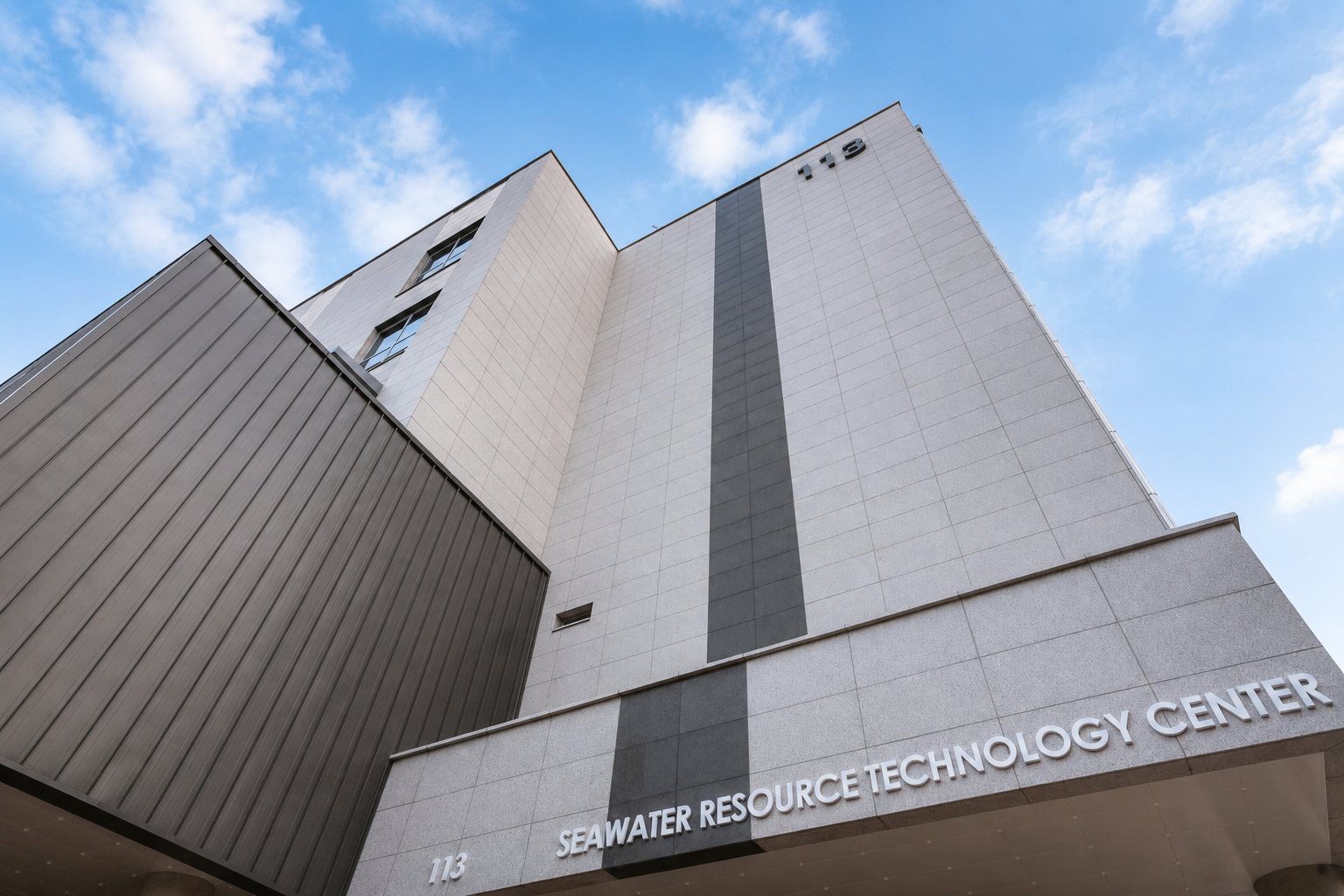
The Seawater Resources Technology Research Center at UNIST has been selected as one of two lead university research hubs nationwide for the 2026 University Research Institute–Startup Collaborative Innovation R&D Program (tentative translation), supported by the Ministry of Science and ICT (MSIT) and the Commercializations Promotion Agency for R&D Outcomes (COMPA). The initiative will provide approximately KRW 6 billion in funding over four years.
Under the program, UNIST will lead a project focused on accelerating the commercialization of direct recycling technologies for LFP batteries, an area of growing strategic importance amid rising global demand for electric vehicle batteries and sustainable energy systems.
The project brings together four UNIST-affiliated startups—EZ Mining, Poseidon Battery, Deckers Solution, and Korea Battery Security & Certificate—to collaborate across the full research and commercialization pipeline. The platform is designed to integrate resource recovery from spent batteries with regenerated cell production and performance verification, establishing a more sustainable and commercially scalable recycling framework.
Unlike conventional research-focused programs, the initiative places particular emphasis on commercialization. In addition to joint R&D, participating institutions will receive support for technology validation, industry partnerships, investment linkage, and market entry, helping translate laboratory technologies into commercially viable products and services.
UNIST also plans to provide participating companies with technical and commercialization support throughout the project, including pilot-scale validation, business model development, market strategy consulting, and industry networking through its broader industry-academic cooperation infrastructure.
“The direct regeneration of LFP batteries is expected to become a key competitive technology for Korea’s secondary battery industry,” said Seok Ju Kang, Director of the Seawater Resources Technology Research Center at UNIST.
UNIST President Chong Rae Park said the initiative reflects the university’s broader commitment to building an innovation ecosystem that connects academia, entrepreneurship, and industrial demand. “Universities must not only cultivate talent, but also create environments where startups can access research expertise, investment opportunities, and industry partnerships,” he said. “UNIST will continue strengthening its role as a platform for meaningful technological innovation and industry-academic collaboration.”
Related Photo
![[기술 흐름 도식] UNIST LFP 배터리 직접 재생 전주기 순환 플랫폼 구축.JPG](/app/board/attach/image/577392_1778656889000.do)